
Over the past several years, I have had the opportunity to participate in numerous panels, policy discussions, and stakeholder meetings focused on the future of the 340B Drug Pricing Program, created by Congress in 1992, to help safety-net healthcare providers purchase outpatient prescription drugs at discounted prices. As Deputy Director working closely with communities that rely on safety-net healthcare providers, these conversations have reinforced just how critical the program is for expanding
access to medications and essential health services for underserved populations.
Through these discussions, I have heard directly from community health centers, rural hospitals, pharmacists, and patients about the role
340B plays in sustaining care in communities that already face significant barriers to healthcare access. For many of these providers, the program helps offset the high cost of medications and allows them to reinvest savings into services such as patient assistance programs, transportation support, chronic disease management, and community outreach.
At the same time, these conversations have highlighted the need for thoughtful reforms that strengthen transparency and ensure the program continues to serve its original purpose of supporting safety-net providers and improving health outcomes for vulnerable populations. There is growing and justified concern about policies that would shift financial risk onto providers serving rural and low-income communities, such as proposals touted by industry groups, to move toward a rebate-based model that would require providers to pay full drug prices upfront.
For many rural and low-income communities, 340B is a lifeline that helps keep healthcare services available locally. Because of 340B, tens of millions of Americans in all 50 states have better access to life-saving care and medicines at no cost to taxpayers. To learn more about the 340B Program check out this explainer video by our partners, 340B Health.
From my perspective, any reforms or changes to the 340B program should prioritize the needs of patients and the providers who serve them over the interests of a healthcare infrastructure that is already bankrupting individuals and families. That means maintaining structures that allow safety-net providers to access medications at sustainable prices, ensuring transparency in the drug supply chain, and addressing practices within the pharmaceutical and pharmacy benefit manager ecosystem that contributes to rising drug costs.
Why communities should pay attention right now
A study by 340B Health of data from the Health Resources and Services Administration found that as of June 1, 2023, contract pharmacy restrictions imposed by drug manufacturers on 340B drugs account for $8.4 billion annually in savings intended for patient care. These restrictions are impacting 340B hospitals and the patients who depend on them for vital care
In February 2026, the federal government issued a Request for Information (RFI) seeking feedback on whether the program should move toward a rebate-based model for drug discounts instead of the current up-front discount model.
This provides a prime opportunity for patients, community organizations, health providers, and other stakeholders to share their perspectives with lawmakers before any future changes are proposed or enacted. The comment period has been extended until April 20, 2026, giving the public more time to provide input.
What is the government asking the public about?
The RFI asks a series of questions to understand whether a rebate model should replace or supplement the current 340B system. Right now, the program is intended to work like this:
Current model (upfront discount):
- Eligible clinics and hospitals purchase available drugs at discounted prices immediately.
A potential rebate model would work differently:
Proposed rebate model:
- Providers would pay the full price for a drug upfront
- Manufacturers would later issue a rebateto bring the price down to the 340B ceiling price.
Why this RFI matters for underserved communities
The voices of community providers, pharmacists, and patients must remain central in these policy discussions. For community health centers, rural hospitals, and safety-net providers, the difference between a discount model and a rebate model is not just a technical change, it can affect whether clinics can afford to provide medications and services. Many safety-net providers operate with limited cash flow. If they must pay the full list price for drugs upfront and wait for rebates, it could create financial strain that affects patient services, pharmacy access, or medication programs.
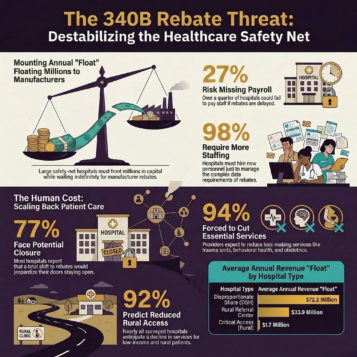
If all of 340B shifts to rebates, hospitals’ ability to provide care will suffer:
- 92% expect access to low-income and rural patients will decline
- 93% expect current levels of uncompensated care will be at risk
- 94% expect they will be forced to reduce services that operate at a loss
How to submit comments
Comments can be submitted through the federal rulemaking portal associated with the RFI. The deadline to submit feedback is April 20, 2026. Link to submit comments
Organizations and individuals can submit comments describing:
- their experience with the 340B program
- how the program supports underserved populations
- concerns about potential rebate models
- recommendations for improving affordability and transparency
The bigger picture
The 340B program has existed for more than three decades and plays an important role in supporting safety-net healthcare providers. However, the program is now at the center of major policy debates involving drug manufacturers, hospitals, pharmacies, and pharmacy benefit managers.
Patients and families from our most vulnerable populations and taxpayers should not continue shouldering the burden of rising drug and healthcare costs while billion-dollar companies continue to profit. For communities that rely on safety-net providers, this is an important moment to ensure the program continues to fulfill its core mission: expanding access to affordable medicines and strengthening care for underserved populations.